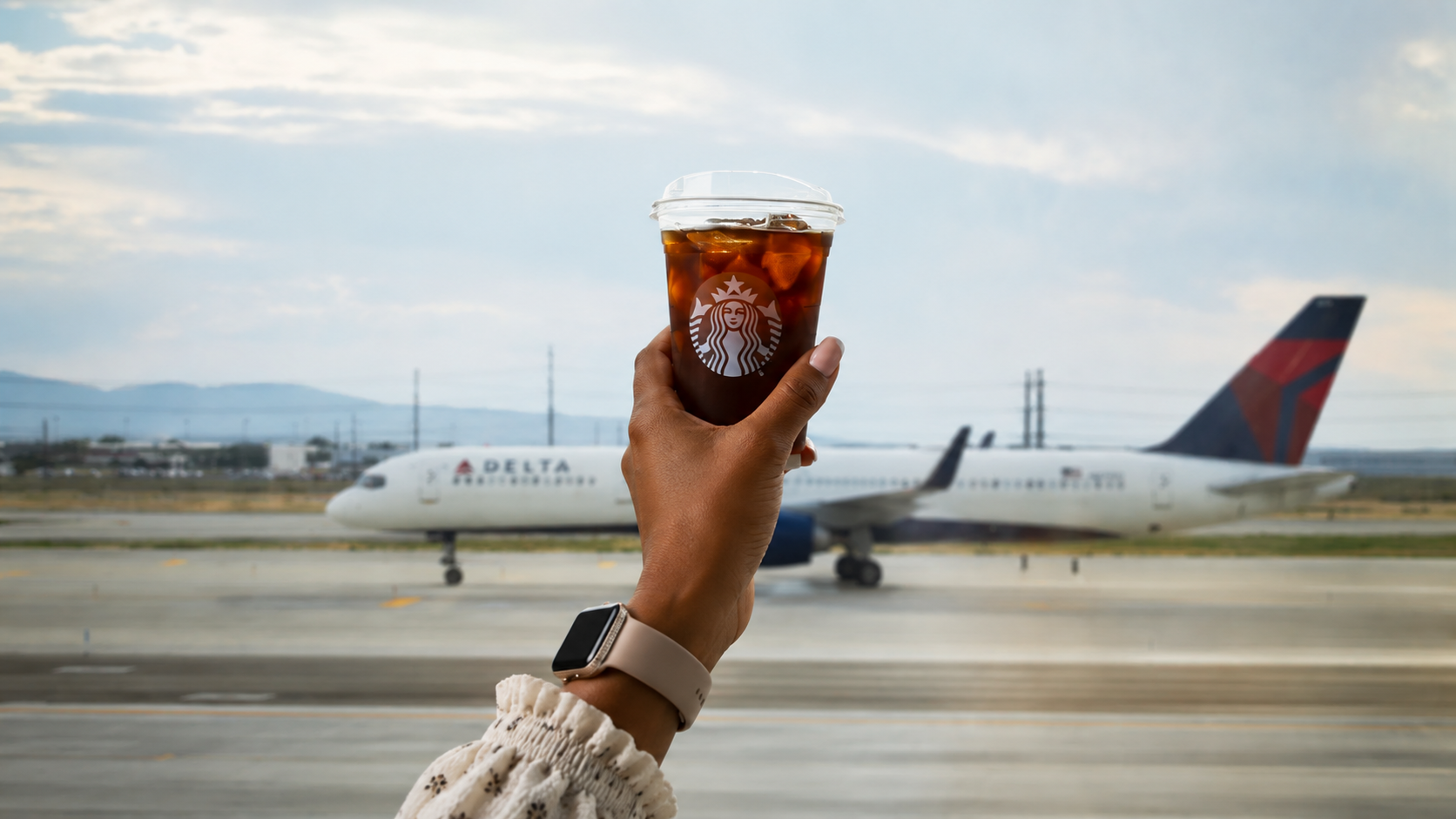
Delta and Starbucks have simplified their loyalty partnership, bringing back one SkyMile for every eligible dollar spent. But the change says something much larger about the future of travel rewards.
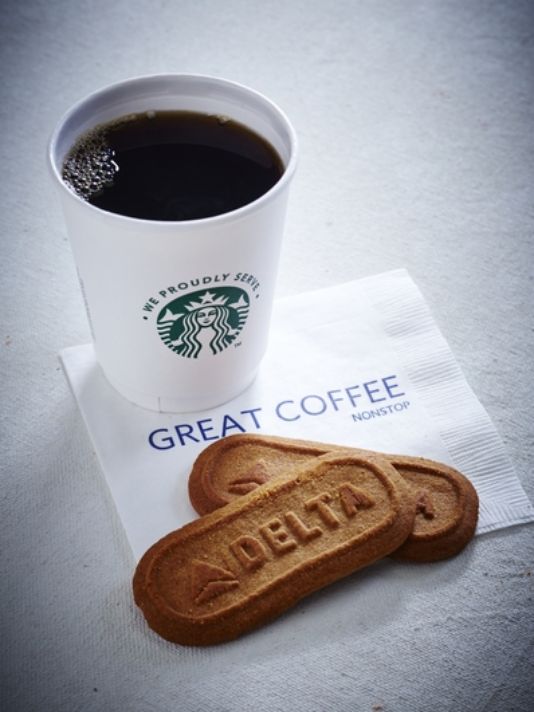
For travelers who consider an airport coffee nearly as essential as a boarding pass, one of Delta’s most recognizable loyalty partnerships has quietly returned to familiar ground. As of August 5, 2026, linked Delta SkyMiles and Starbucks Rewards members once again earn one SkyMile for every eligible dollar spent at participating Starbucks locations — the structure the partnership launched with in 2022, restored after roughly two years away.
A $7 latte earns seven miles. An $18 coffee-and-breakfast order earns eighteen. There is no threshold to clear, no increment to remember.
That replaces a reload-based model under which a customer earned nothing at all on purchases under $25, and earned meaningfully more only by prepaying $75 or $100 at a time onto a digital Starbucks card. The logic wasn’t irrational — it improved cash flow and encouraged prepayment — but it asked customers to perform an administrative task at nine in the morning in exchange for roughly one percent back. Most of them, understandably, declined. Two years of behavioral data appear to have made that case more persuasively than any strategy deck could have.
There Is One Important Catch
The more consequential change sits further down in the announcement, where it has drawn a fraction of the attention.
To keep earning miles on coffee, a member must now have completed a qualifying Delta-marketed flight within the previous twelve months. Existing linked members get a one-time grace period through October 5, 2026. Newly linked members receive twelve months of automatic eligibility from the day they link. After that, the coffee stops converting.
This is not a footnote. It is the thesis of the entire redesign.
Delta spent four years teaching roughly four million linked customers that their morning ritual was a form of travel savings, and it has now attached a condition to that lesson. The rate got simpler. The relationship got more demanding. Both moves point in the same direction — and the requirement reveals what Delta actually wants from this partnership. It is no longer a mechanism for turning millions of coffee drinkers into passive mile collectors indefinitely. The benefit is now explicitly an extension of an active relationship with the airline.
For someone who already flies Delta several times a year, the requirement will barely register. For the infrequent traveler who linked accounts primarily to accumulate miles from a life spent on the ground, the proposition just narrowed considerably.
What a Mile Is Actually Worth
The consumer arithmetic is modest, and worth stating plainly rather than burying.
Independent valuations place a SkyMile at roughly 1.2 cents, which puts the effective return on Starbucks spending at about one percent — a rounding error next to the three to four points a strong dining card earns on the identical transaction. Someone visiting twice a week at $8 a trip generates around 832 miles a year. That will not fund a flight, and anyone approaching this as an optimization problem has misread the assignment.
The real economics live one level up.
Delta collected $8.2 billion from American Express in 2025, roughly fourteen percent of adjusted operating revenue. In the March 2026 quarter alone, that remuneration exceeded $2 billion and grew ten percent, while loyalty revenue as a category grew thirteen. One spring valuation priced the SkyMiles program itself near $31.8 billion — the most valuable airline loyalty program in the world — with about two-thirds of that value traceable to credit card partnerships.
Understood in that light, the coffee deal is not a rewards program at all. It is a frequency instrument.
Delta is high-ticket and infrequent; most Americans encounter it a handful of times a year, under conditions of mild duress, in a building designed by people who have never been happy. Starbucks is the inverse — low ticket, extraordinary frequency, encountered daily in a state of small pleasure. Linking them lets Delta occupy a customer’s attention two hundred mornings a year instead of four afternoons, and lets Starbucks borrow the aspirational shimmer of a departure board. When the partnership launched, Delta set a goal of one million linked accounts in year one and cleared it in sixteen days. The enrollment site crashed on day one.
Starbucks Is Negotiating From a Different Position This Time
The reversal also lands with Starbucks holding considerably more leverage than it had when the reload structure went in.
In the quarter ending June 28, global comparable sales rose 7.9 percent and North American comps climbed 8.1 percent on a 4.5 percent increase in transactions — growth coming from more people walking through the door, not simply from charging them more. Operating margin expanded 430 basis points to 14.4 percent, full-year guidance moved up, and Starbucks Rewards reached 35.8 million active U.S. members. The company that entered this partnership bleeding traffic to competitors is renegotiating as one that has demonstrably reclaimed its footing.
That context matters, because Starbucks made its own loyalty changes in March. The program reintroduced elite tiers for the first time since 2019 — Green, Gold, and a new top-level Reserve requiring 2,500 Stars in a rolling year — while trimming earn rates such that most members came out behind and only the heaviest spenders came out ahead.
Elite status is a powerful engagement mechanism precisely because it converts a transaction into a standing. But it only works when the ladder is legible.
Layering a reload-dependent airline mechanic on top of a newly tiered Star system produced a rewards experience that required a spreadsheet to navigate, which is an unforgivable thing to do to a person buying coffee. Returning the Delta side to flat, purchase-based earning restores the clarity the Starbucks side spent to buy its hierarchy. Double Stars on Delta travel days survive untouched — the one mechanic in the whole arrangement that has never needed explaining, because it maps to something a traveler already feels.
The Part Sophisticated Spenders Should Actually Notice
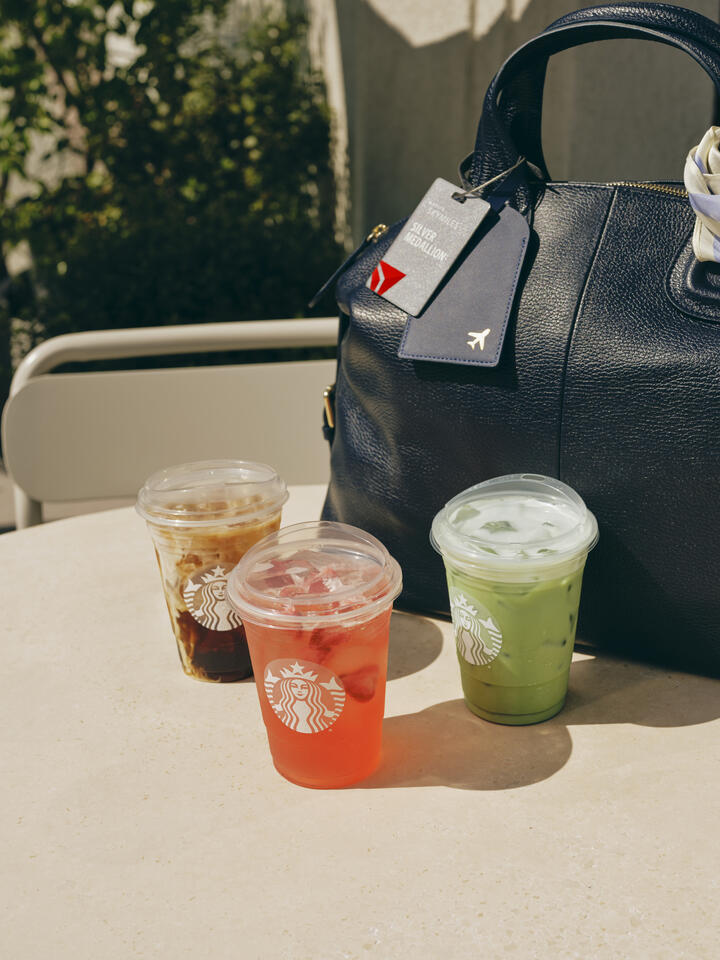
Strip away the scorekeeping and the practical takeaway is about stacking, not chasing.
A single Starbucks transaction can now credit three ecosystems at once: Starbucks Stars, Delta SkyMiles through the linked partnership, and whatever your card earns on the purchase. That is the entire value proposition — and it only holds if the purchase was already happening. Nobody should start buying $8 coffees for a one percent return. The exclusions matter here too: taxes, gratuities, gift cards, and alcoholic beverages don’t earn, so “one mile per dollar” should never be read as one mile for every dollar at the bottom of the receipt.
The broader shift is that airlines increasingly want a seat at the spending that happens between trips. Hotels, rides, groceries, dining, coffee. Individually these look like small promotions. Collectively they form something closer to a commerce network built around a traveler’s ordinary week.
Which changes what good strategy looks like for anyone with the means to be indifferent to a one percent return.
The goal is no longer finding the single highest multiplier on a given transaction. It is understanding how several loyalty layers overlap on purchases you were making anyway — and that is precisely the quiet optimization Luxi, the LUXE AI concierge, was built to handle: surfacing which programs, dining partners, and card benefits actually stack on a given reservation, so the math runs in the background and you simply go where you were already going.
The luxury in modern loyalty is not the multiplier. It is not having to think about it.
For most people who genuinely fly Delta, this change is a straightforward improvement — small purchases count again, and the reload chore is gone. For the narrow cohort disciplined enough to load $100 at a time and clear two miles per dollar, it is a modest step down.
And for everyone else, October 5 is a date worth putting in the calendar. After it, the cup stops counting.
Related: the Chase Sapphire Reserve tables in Atlanta — and where to actually spend your $300.