
AI agents can now search, compare, and pay on your behalf. Four different companies are racing to own the plumbing. Here’s the plain version — including the parts nobody has figured out yet.
The pitch is genuinely appealing, and it goes something like this.
You type: book me a nonstop to London next week, under $600, nothing overnight. Something goes off and checks the airlines, considers the nearby airports you’d actually tolerate, cross-references your loyalty accounts and which card earns best on airfare, books it, and reports back.
You didn’t open a tab. You didn’t compare anything. You just said the thing.
That’s agentic commerce, and it is no longer theoretical. The question worth asking isn’t whether it works. It’s who’s building it, and what they want.
What It Actually Is
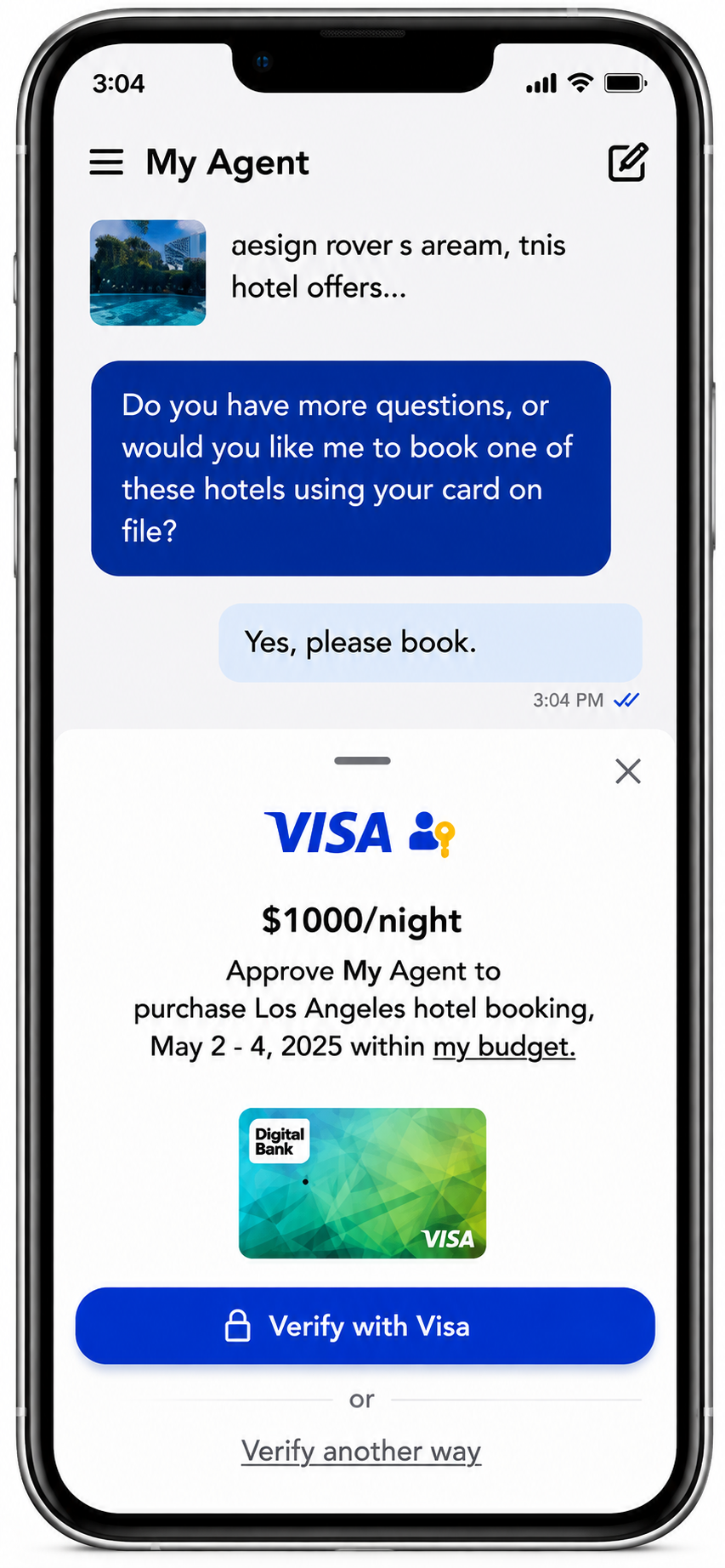
The short definition: shopping where an AI agent closes the loop — searching, comparing, and completing a purchase — with little or no clicking from you.
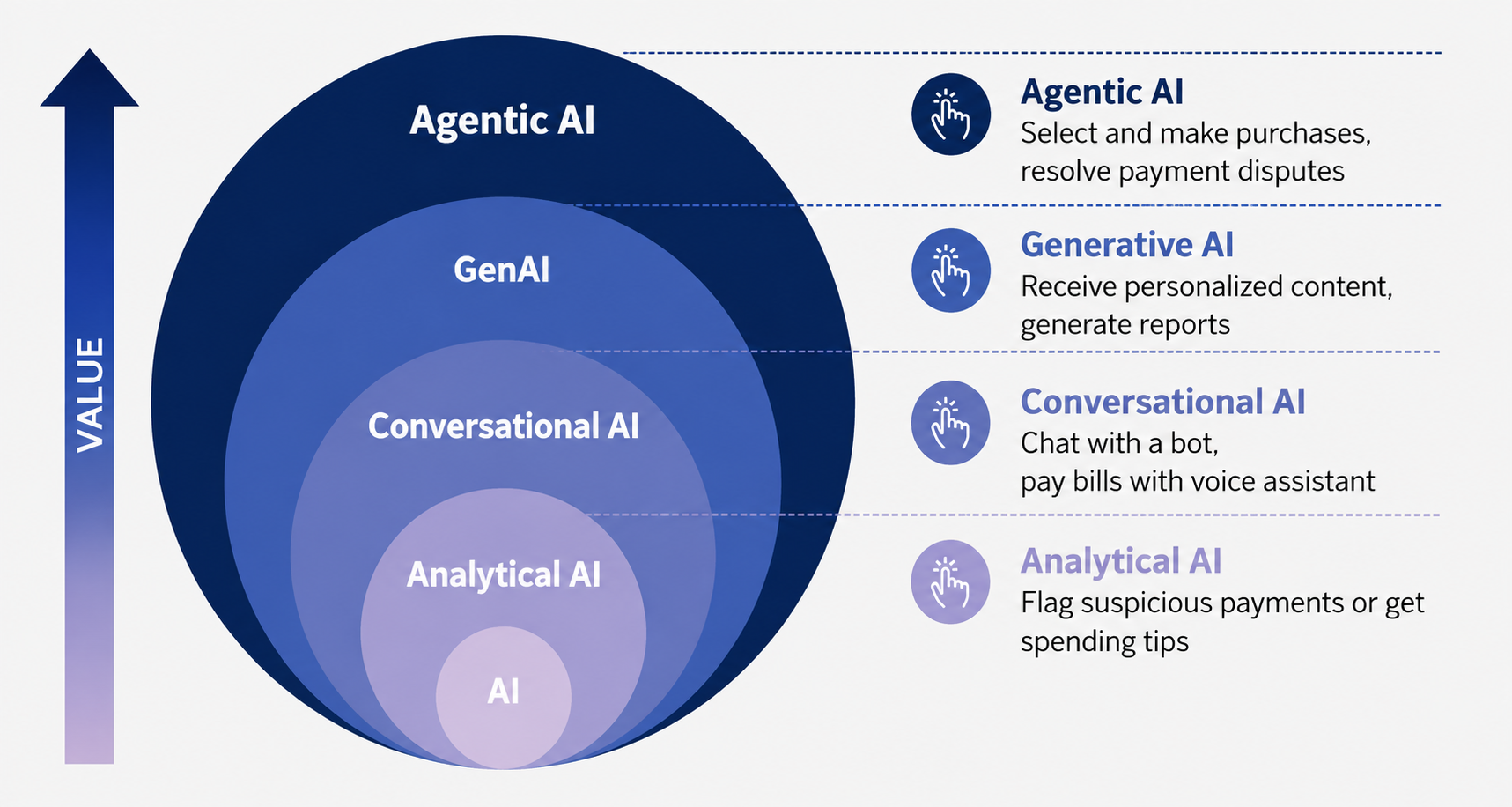
The distinction that matters is between an assistant and an agent. An assistant answers. An agent acts. Ask a chatbot for restaurant recommendations and you get a list. Ask an agent and it checks availability, holds the table, and puts it on your calendar.
Three things make that possible. Memory — it knows your size, your preferences, what you bought last time. Tools — it can reach APIs and databases, which means it can do things rather than just describe them. Reasoning — it can take “I need a shirt” and work out that it should ask you about the occasion before searching anything.
Together those turn a search box into something closer to a competent assistant who happens to have your card number.
Everyone Is Building the Same Thing at Once
Here’s what most coverage misses: this isn’t one company’s project. It’s a standards war, and it broke out in 2025.
Mastercard launched Agent Pay in April 2025, using what it calls Agentic Tokens — a version of your card credential bound to a specific agent, a specific merchant, and a specific set of permissions, so software can check out without ever seeing your real number. Every U.S. cardholder was switched on before the 2025 holidays.
Visa went the same direction with Intelligent Commerce and its Trusted Agent Protocol, tackling the same core problem from the issuer side: how does a merchant know this bot is authorized and not a very polite fraudster?
OpenAI shipped the Agentic Commerce Protocol with Stripe, aimed at letting purchases complete inside a chat window rather than sending you off to a checkout page.
Google has the Agent Payments Protocol and a Universal Commerce Protocol, both pitched as open standards for agents and merchants to talk to each other.
And they’re all cooperating and competing simultaneously, in that specific way large companies do when nobody’s sure which standard wins and everybody would rather be in the room. Mastercard has publicly joined Google’s protocol while running its own. Read that however you like.
The reason for the scramble is simple. Whoever owns the layer between you and your purchases owns an extraordinary amount — not just the transaction fee, but the decision itself.
The Part Nobody Has Solved
Now the interesting bit, and to Mastercard’s credit, their own explainer raises it rather than glossing over it.
If an agent makes a purchase and it goes wrong, who is responsible?
Not rhetorically. Practically. How does a chargeback work when no human clicked buy? If your agent books the wrong hotel, is that on you, the company that built the agent, or the merchant that accepted it? If someone feeds a bot a misleading offer and it takes the bait, whose loss is that?
These are not edge cases. They are the ordinary weather of commerce, and the honest answer right now is that the rules are still being written. Mastercard has published work on verifiable intent and the standards questions this raises, which tells you the industry knows the gap exists.
Two things will decide whether any of this is trustworthy. Permissions that are genuinely clear — you should know exactly what your agent may buy, up to what amount, without reading a legal document. And transparency — when an agent does something, you should be able to see why. An agent that can’t explain itself is just a stranger with your card.
The Question Actually Worth Asking
Which brings us to the thing the explainers skip.
Every article about agentic commerce asks whether the agent is capable. Almost none ask whose interests it represents.
An agent built by a payment network is measured on transaction volume. An agent built by a retailer is measured on that retailer’s sales. An agent built by an airline will find you a flight, and it will be their flight. None of that is sinister — it’s just what those companies are for.
But it matters enormously, because the whole promise here is that you stop reading the fine print. And the fine print is where the traps live.
We’ve written about a Chase perk that quietly disqualifies you from a better Mastercard offer, a rewards currency that expires at year-end no matter when you earned it, and a dining credit split into two windows that don’t roll over. In every case, the money is lost by not knowing something. An agent that reads all of it and tells you honestly is transformative. An agent that reads all of it and stays quiet when the answer is inconvenient for its owner is worse than no agent at all.
That’s the whole ballgame, and it will be decided by incentive structure long before it’s decided by model quality.
Where This Actually Stands
Fully autonomous consumer agents are still early. What exists today is mostly assisted — the agent researches, assembles, and hands you a decision, and you approve it.
Honestly, that’s the right place for it to be. The worst failure in this category isn’t a purchase that fails loudly. It’s a purchase you believe happened that didn’t, or one that happened that you never wanted. Human confirmation is cheap insurance against both, and anyone shipping full autonomy this year is optimizing for a demo.
Expect that to loosen gradually as the liability rules firm up and the standards settle. Expect multi-agent systems too, where several specialized agents coordinate on something one couldn’t handle alone.
And expect the marketing to arrive well ahead of the capability, because it always does.
The useful posture in the meantime: be curious about what agents can do for you, and specific about who’s paying for them.
Would you let an agent buy on your behalf? Will agents need insurance next?